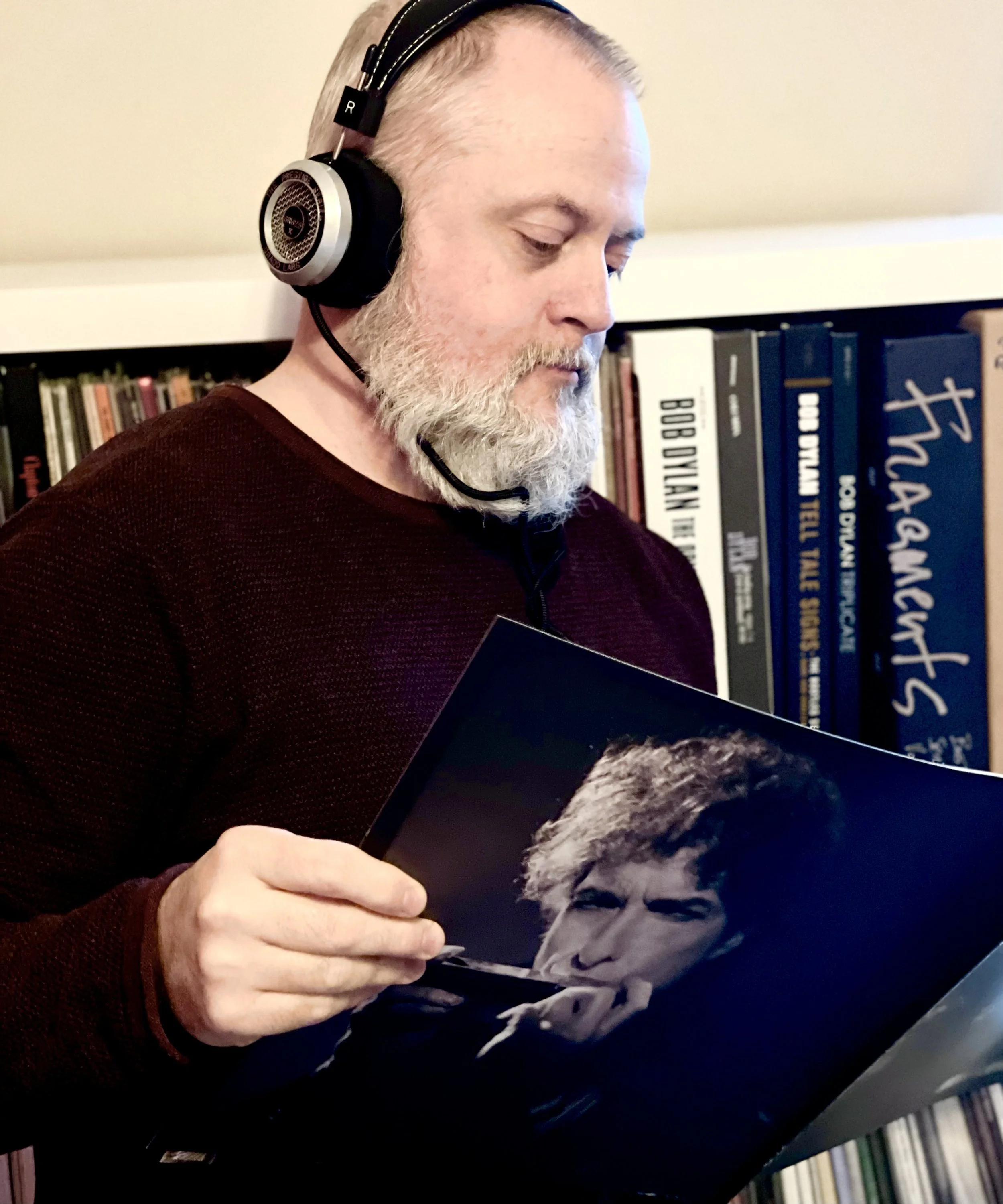
My Position On The Use Of Generative Artificial Intelligence In My Work
About JB Minton
I'm a writer based in Ohio. I've published six books:
A Skeleton Key To Twin Peaks (First Edition: 2020), (Second Edition: 2025)
Ey Up! An American Engages With This Is England(2021)
Sermons On The Outlaw Josey Wales (2023)
Twin Peaks Class (2025)
Enlightenment and Twin Peaks (2026)
Father, Why Are You So Angry? A Children’s Book For the Growing Man (2026)
I co-created two popular podcasts about television as art. I also write the newsletter Terms of Enlightenment, an ongoing publication on the conditions under which clarity, agency, and meaning are still possible in a culture built to erode all three.
I am dedicated to expanding human consciousness through my scholarship, art, and strong, supportive relationships.
I'm also a Certified Consciousness Advisor Professional, and I've practiced Transcendental Meditation daily for years. I don't lead with that fact because it's exotic; I lead with it because it's the discipline underneath everything else I do.
Writing essays and books of critical analysis and appreciation for art as a tool of expanding consciousness is an exercise in seeing clearly, and writing fiction is an exercise in imagining clearly. Advising people on how to align their lives with their actual best interests (not the version of their interests that culture, habit, or anxiety hands them) is the same exercise, applied directly to a person rather than to a creative idea.
These aren't three separate creative workstreams stapled together; rather, they're one practice of attention, pointed in three creative directions. The TV and film criticism, as well as the Twin Peaks books, exist because I think the commercial art we treat as disposable consumables usually does more work on us than we admit, and that looking at art clearly is itself a discipline worth taking seriously. And my advisory work exists for the same reason: it is aimed at a person's actual life rather than a screen. But neither one is decoration for the other. A life well-lived is one of balance.
I didn't arrive at any of this through wellness culture, and I'm not interested in “performing enlightenment.” What I offer, in the books, essays, and advisory work, is the result of doing the actual work of paying attention for a long time, without flinching from what that attention turns up.
JB Minton At A Glance
— Author of 6 books, including 3 on Twin Peaks
— Co-host, The Red Room Podcast (2011-2022) and In Our House Now Podcast: An Inquiry Into Twin Peaks The Return with John Thorne
— Writer, Terms of Enlightenment newsletter
— Certified Consciousness Advisor Professional
— Daily practitioner, Transcendental Meditation
— Ohio-based, Midwestern American Author, A Husband, Father and Son with a Long, Successful Career in Software Sales and Development
I have maintained a successful twenty-five-plus-year career in software sales, including working with and selling generative AI to some of the world's largest companies. I understand modern computing technology well. I began my career with a card catalog and the Dewey Decimal system, and now I’m using technology I can drive with plain human language.
My intention is to be a great writer, not become one. I will use any available tool at my disposal to do so, and I am committed to working through legal, ethical, and moral principles in bringing my shaped creative ideas to market as intellectual products.
The line I draw below, regarding my use of Generative Artificial Intelligence, is professional and ethical, not technological.
After years of using, testing, and selling multiple Generative AI products, I've settled on a clear position about its use in my work going forward.
For scholarship and creative writing intended for commercial publication, Generative AI is valuable for ideation and planning: building workflow automations, research, design, and producing structured outlines and project plans. That value ends for me where writing the first draft begins.
Everything Generative AI produces in my workflow is considered Draft 0. This means my first drafts begin when I start typing or speaking.
I have used Generative AI to produce first drafts before, during the testing phase of this wondrous modern computing technology, but I still maintained a strong multi-step human -driven revision process, the same one I’ve been applying to my scholarship and art for 30 years. Going forward, I will not use Generative AI to draft anything readers see without a complete author-obsessed revision. Every word I publish will be written, rewritten, and revised by me, or by an editor of my approval. If Generative AI produces a phrase I happen to like, and I happen to keep it in place, that’s my decision as a revising editor of my work, and I pay for the services that render these outputs. I expect those platforms to compensate artists and scholars for their work. I support all legislation and enforcement to this end. Artists should be paid for their art.
Finally, I also use machine learning and Generative AI tools for copy editing and structural revision. This is now essentially standard across publishing, no different from the spell- and grammar-checking applications of the past.
Artificial Intelligence is an extension of Human intelligence, but not Human creativity.
Modern AI is more like the Great Library of Alexandria, one of the wonders of the ancient world: a place where all available human knowledge was cataloged and made accessible for scholarship and the exchange of ideas and best practices for living.
While AI can help me think and prepare. It will never write for me.
And I write for you. 🙏