Why The Last Jedi Is Important
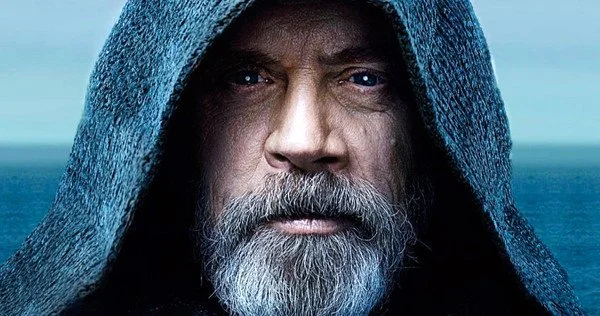
The Redemption of Luke Skywalker And The Resurrection Of The Jedi Order
〰️
The Redemption of Luke Skywalker And The Resurrection Of The Jedi Order 〰️
In 1977, a towheaded boy sits in a theater in Central Illinois, and his uncle reads the words that appear on the screen to him. “A long time ago, in a galaxy far, far away…”
Fast forward 40 years, and the man who grew from that boy is in another theater, hundreds of miles away from the first; his own children and wife sit next to him, and he doesn’t try to hide the tears that stream from his eyes as two moments in time synchronize and the years fold into each other, creating a rare moment of transcendence through Art.
Like the rest of America in 2017, the Star Wars community is bitterly divided after Episode VIII: The Last Jedi was released in December. The Internet immediately exploded with opinions on both sides; some saying the film was a “dumpster fire” of needless side stories and gap-filled character arcs, others saying it was the greatest movie-going experience since Return of the Jedi.
The Last Jedi is the most important film to date in the entire Star Wars canon because the mythological arc of Luke Skywalker's Hero's Journey has come to a successful conclusion. Since the original film was released in 1977, every character and plot line from Jar Jar Binks to the midichlorian prophecy of “The One Who Will Bring Balance to The Force,” has led to the moment where Luke Skywalker walks out onto the salt plain battlefield of Crait.
George Lucas explains why Joseph Campbell's "The Hero With A Thousand Faces" was instrumental in finishing writing Star Wars.
In order to put the importance of Luke Skywalker's Hero's Journey in perspective, consider years ago, when George Lucas was struggling to finish the manuscript for Star Wars. During this time, he came across the seminal book by master Mythologist Joseph Campbell, The Hero With A Thousand Faces, in which Professor Campbell lays out the single story of the Hero told across thousands of cultures throughout history. From this commonly repeated cycle, George Lucas approached his protagonist through new eyes and created Luke Skywalker's Hero’s Journey, which would take forty years, nine films (and counting), hundreds of hours of television, and dozens of books to tell.
According to Professor Campbell, every Hero's Journey contains the following elements:
DEPARTURE:
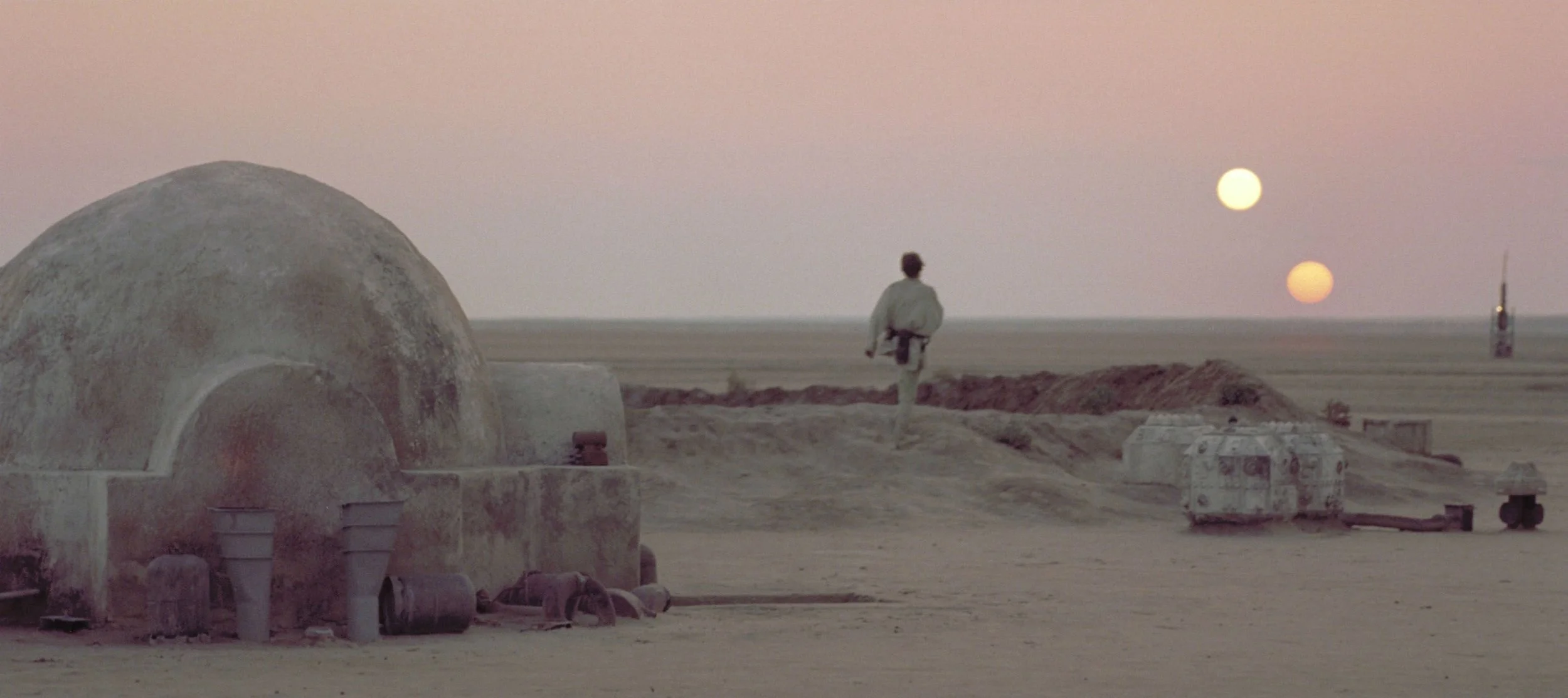
The Call To Adventure (Luke standing looking at the Tatooine Suns, an empty feeling in his heart…)
Refusal of the Call (Luke tells Obi-Wan, “I’m not going to Alderaan. I have to get home. I’m in enough trouble as it is…”)
Supernatural Aid (Obi-Wan is going to teach Luke the ways of The Force so he can become a Jedi Knight like his father…)
The Crossing Of The First Threshold (Obi-Wan cuts the arm off the criminals who try to kill Luke in the Mos Eisley bar…)
The Belly of the Whale (The tractor beam pulls The Millennium Falcon into the Death Star…)
INITIATION:
The Road of Trials (Destroying the first Death Star and then Discovering Darth Vader is his Father…)
Atonement with the Father (Luke rescues his Father…)
The Ultimate Boon (Luke and Vader together defeat the Emperor while The Rebels Destroy the Second Death Star…)
RETURN:
The Refusal of the Return (Luke fails to allow for the balance of Dark and Light in his star pupil, refusing to pass on what he has learned from his own father, and, in doing so, assists Snoke in creating Kylo Ren). Luke then passes into hermitage and seclusion in his shame and self-loathing, denying Rey when she comes to recruit him back to the Resistance…)
The Crossing of the Return Threshold (After opening himself back up to The Force and palaving with Master Yoda, who tells him that his failure to bring balance is exactly the lesson he should have taught Rey, Luke confronts his own dragon of the shame of his failure.) He summons all the power he can from The Force to project himself across the Galaxy and stands before Kylo Ren to apologize, giving what's left of The Resistance fighters the time they need to escape…)
Master of the Two Worlds (Luke owns his failure and forgives himself and Kylo, while informing him the war is just starting and the Jedi are reborn along with the Resistance…)
Freedom to Live (Luke passes from this life while also passing the torch of a New Jedi Order to Rey, who is taking the first steps in her own Hero’s Journey, one free from the Skywalker curse, balance restored to the Force as one powerful Jedi and one powerful Sith square off against each other in the battle to come. Perhaps Rey is humble enough to allow for the Dark and the Light to balance inside her as she seeks to bring peace and harmony to the Galaxy.)
When Luke Skywalker collapses in The Last Jedi, looking up at the Twin Suns of Tatooine burning in the sky of Ahch-To, a magic time portal opens up for every viewer, no matter their age. That towheaded two year old, whose eyes first fell upon that young man staring into those same twin Suns in Episode IV, pondering the Call to Adventure he felt in his heart, is also the forty-two year old man watching that much older hero take his last breath while staring into those same twin Suns, forty years later and a lifetime’s journey for all of them, the boys and the men, the women and the girls, each of us, alone and yet together.
When Rey approaches Luke, his father’s blue light saber held out in her hand, a look of longing for a father figure on her face, Luke is a broken man who has shut himself off from The Force, a miserable hermit waiting to die, a lesser man than even his own master Obi Wan was when he and Luke met through fate in the Tattoine desert so long ago. But Luke's journey was not yet complete; there was one more dragon he had to face-the one inside his heart, where he would be forced to stare into the abyss of his own failure and, like those characters in Stephen King's greatest novel, to Stand in spite of his own fear and shame, to stand true in the face of his greatest enemy, the same one he fought in the cave on Dagobah all those years ago-himself. But stand he did.
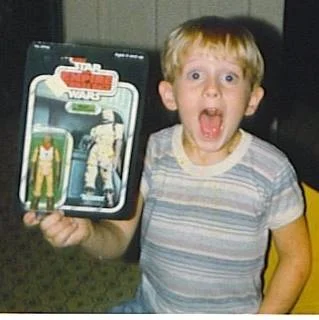
The author as a boy receiving Bossk the Bounty Hunter, the same look he has the first time seeing any new Star Wars film in the theater.
In the end, Luke Skywalker gave everything he had so the Jedi could be reborn, and so the Resistance against The Empire and its terrible child, The First Order, could be defeated with the hope that for the first time in a long time, the galaxy could be ruled by Democracy working in the interests of peace and the freedom of all people. Luke Skywalker gave everything he had to bring balance back to The Force, just like the prophecy proclaimed so long ago, his Hero's Journey completed in that moment where the Twin Suns became the final sight his old eyes would ever gaze upon, a moment that found that towheaded boy 40 years older but staring at the movie screen with the same wonder as when he first saw those Suns so many years ago. What a magical moment this is for every Star Wars fan, and for every human being, because it speaks to each of us in this time of great peril within our own civilization, as we are each being called to stand up in our own lives and make that same choice of facing down our greatest fear to defeat that which now threatens us all, what happens after we give in to ignorance, hatred, bigotry, anger, and apathy toward the suffering of those in need.
In the closing of The Hero With A Thousand Faces, Professor Campbell says this about the Hero today:
“The modern hero, the modern individual who dares to heed the call and seek the mansion of that presence with whom it is our whole destiny to be atoned, cannot, indeed must not, wait for [their] community to cast off its slough of pride, fear, rationalized avarice, and sanctified misunderstanding. ‘Live,’ Nietzsche says, ‘as though the day were here.’ It is not society that is to guide and save the creative hero, but precisely the reverse. And so every one of us shares the supreme ordeal—carries the cross of the redeemer—not in the bright moments of [their] tribe’s greatest victories, but in the silences of [their] personal despair.”
Luke Skywalker’s Hero’s Journey reaching completion is the most important thing about Episode VIII: The Last Jedi and all the other nitpicking negativity carries zero weight when compared to the importance of what happens on that rocky island at the end of this film, where A New Hope is born and finally an old promise is fulfilled, a promise that a nobody from nowhere can become powerful enough, by listening to their own heart and moving with love as a team doing what's right for everyone, to defeat even the mightiest and most cruel of empires.