The Heart Of The Art Of Steven Spielberg: Part One
Part 1: An Overview Of The Nine Themes of Steven Spielberg’s Library Of Film
When I consider the meaningful memories of seeing films in the movie theater over the past five decades, Steven Spielberg’s influence is never far away from those emotions. Yet, I am revolted by positing the horror of a world where none of Spielberg’s films existed. It’s not a pretty America to think about, much less live inside.
Jaws may have been the first time I felt sheer terror at the sight of Nature turned without mercy against human beings caught in a web of hubris. E.T. may have been the first time I felt empathy for something that wasn’t human after it scared the shit out of me, running and screaming at Elliot in the star-lit dark from a low-lit shed. Raiders Of The Lost Ark introduced me to the dangers of Fascism. Schindler’s List forced me to feel the horror of what the Holocaust truly cost our species, while Jurassic Park made me question my young faith in science as the solution for everything that ails us.
How often did I stare up at the big movie screen with my little mouth open in dumb childish awe from a Steven Spielberg film? Like most of you, dozens of times. So I nearly climbed out of my seat when I watched Dr. Alan Grant hanging suspended inside an SUV that crashed into a tree branch after being assaulted by a genetic achievement so monstrous that it may not be able to be contained. And those branches are breaking fast.
These cinematic experiences are priceless, Art worth coming back to and thinking about over a lifetime. But what about the work of this man’s life, Steven Spielberg? What would I learn by sitting down in a dark room in my house, turning on the projector, setting the Dolby Atmos to a pleasant enough volume to be ambient, exciting, but not overwhelming? To sit captive through the dreams, schemes, and themes that this great American Artist has led teams of talent to conjure up out of thin air and project on millions of screens billions of times? That was a project worth undertaking to me.
Over two calendar weeks of viewing time, spread out over six months, I learned that popular Art doesn’t come cheap. Making thirty-two films means making seven hundred thousand artistic choices and several thousand financial ones, and time never stops working against us all.
This experience gave me something worth thinking about, and I want to tell you about it in as brief a time as possible. I know how valuable yours is.
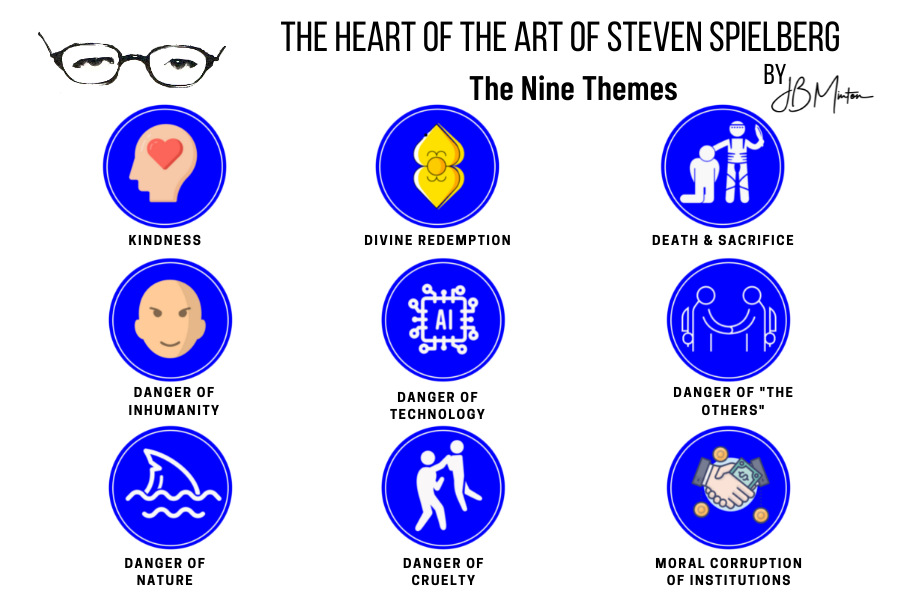
These are the icons I’m using in the analysis, one for each of these themes.
Methodology of Analysis
I never know how these projects will break down when I press play on the first film or episode. Usually, I start taking notes about things that interest me, mental notes first, and eventually, they make it onto some screen. But mostly, I think about the moments that stick to my mind and fester. These moments sometimes drive me to a blessed obsession that takes me away from the troubles of tomorrow, and I forget how to worry for myself.
For this Spielberg Screening Series, it became clear pretty early on that this wanted to be a thematic analysis that explored Spielberg’s entire body of work from 1971’s Duel to 2018's Ready Player One. So, in my notes, film by film, I identified the common themes across these films created over fifty years of work by thousands of people, representing billions of dollars invested and even more returned.
I identified nine key themes and assigned up to four levels of thematic categorization to each film. Of course, some have fewer themes, and what is arguably Spielberg’s worst-aesthetic film has only one, though it did turn a profit. I’ll get into the budgets and earnings of the films in Part Two. But first, let’s explore the nine themes across five of the six decades this man has been working through.
The Danger of Technology: Where the abuse of Technology threatens to kill us.
The Danger of Inhumanity: When people treat others with no basic common decency or commitment to the Common Good, it threatens the stability of our entire civilization.
The Danger of “The Others:” Either aliens or other “evil” humans are coming to kill the ones we care about, without mercy. How can we defend ourselves without losing our Humanity?
The Danger of Nature: Nature will kill us all unless we respect its boundaries for our species.
Moral Corruption of Institutions: The institutions created by humankind are corrupted against the common good and threaten the stability of our civilization and the cultivation of our Humanity.
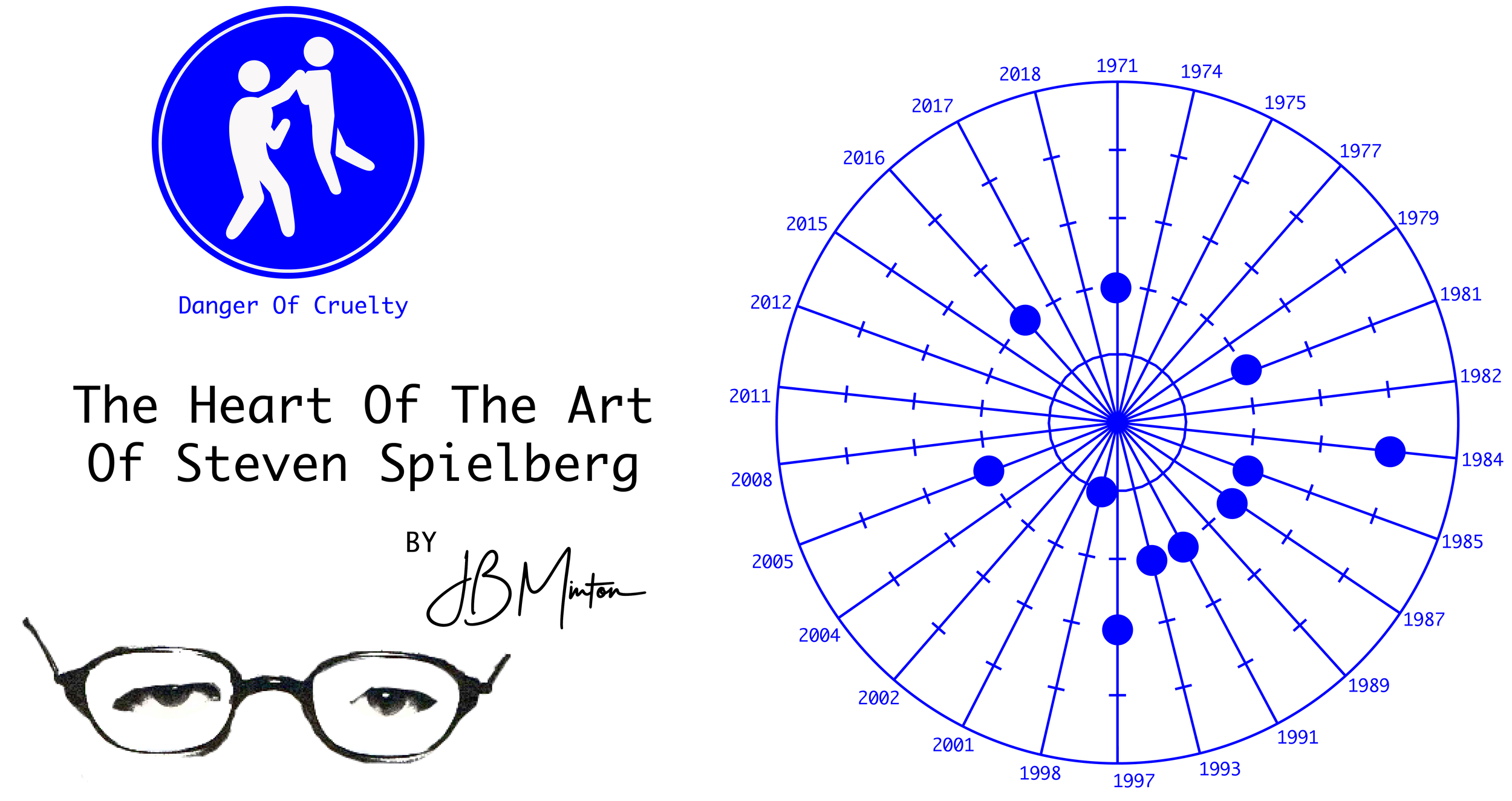
Cruelty: The heart of darkness drives weak human beings to commit terrible acts against other humans.
Kindness: The human heart of gold responds to cruelty with mercy mined from the highlands of the heart.
Death & Sacrifice: Life is a burning fire that requires sacrifice. Death is the ultimate sacrifice, followed by living through trauma.
Divine Redemption: Good people need a little help from time to time.
Theme Intensity
I allowed myself to choose four of these themes per film and then apply a four-point scale to their intensity in each movie. Thus, the highest-intensity theme received four points, and the lowest received one.
Themes Types
There are four types of themes explored in this new criticism. Primary, Secondary, Supporting, and Nuance themes.
Nuance Themes add spice to the film, defining its ultimate flavor, but aren’t the narrative driving force.
Supporting Themes are always there; like the foundation of a house, they establish the form and inform every aspect of the narrative structure.
Secondary Themes drive the conflict as they interact with the Primary Themes, and Primary Themes drive the narrative.
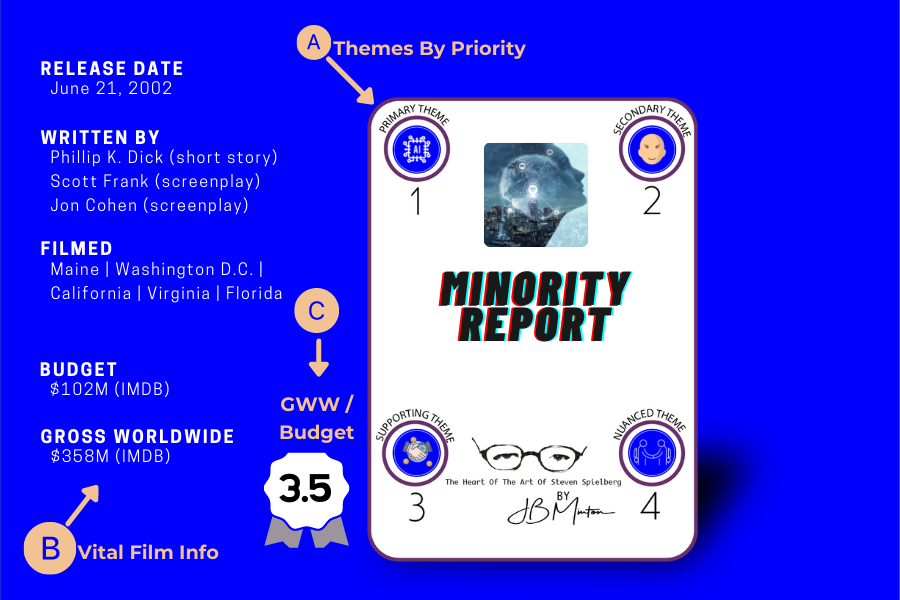
In this series’s Supplement, I will offer these playing card breakdowns for each of Steven Spielberg’s 32 directed films.
For example, consider Minority Report. I tell you that I found that the Danger Of Technology was the primary theme in that film. In contrast, the secondary theme of The Danger of Inhumanity drives the film forward as this insane technology that predicts future crime collides with a father’s trauma over losing his child to abduction (when he was his protector) and ultimately lost his family and will likely lose his life. The supporting theme of that film is The Moral Corruption of Institutions, where the leader of the Pre-Crime Program committed a horrible murder and abduction to get it started. That corrupted man now seeks to cover his crime by adding more murder on top and framing an innocent man still suffering through massive trauma. The Nuanced Theme is The Danger of “The Others,” and it permeates the film's paranoia like the spice melange in the desert air of Arrakis.
By assigning these four levels of thematic impression to each film, I converted a qualitative response into quantitative metrics that can power a numerical analysis with visual representation. In other words, what I’m offering here is more than just my opinion. I’m creating a framework within which we, as lovers of film, can tactically disagree and still strategically come to terms with what this Art means beyond our simple personal feelings. For this exploration of the thematic imprint, I chose the radar graph as the vehicle for displaying these assessments. The ring of the center circle becomes the first point of thematic value for each year of cinema. Some years hold more potential points because Spielberg released two films in the same year (e.g., 1993 was a big one for him). Three more tick marks make the four possible, with the final circle edge a placeholder for those years that he amped up a theme across two films.
I used years instead of films here because I find it less distracting than film titles, which tend to pull me back into the aesthetics of each film rather than thinking about these productions as projects built with skills and labor over annual timelines and resource constraints.
Let’s briefly explore the impact of these themes over time.
Kindness
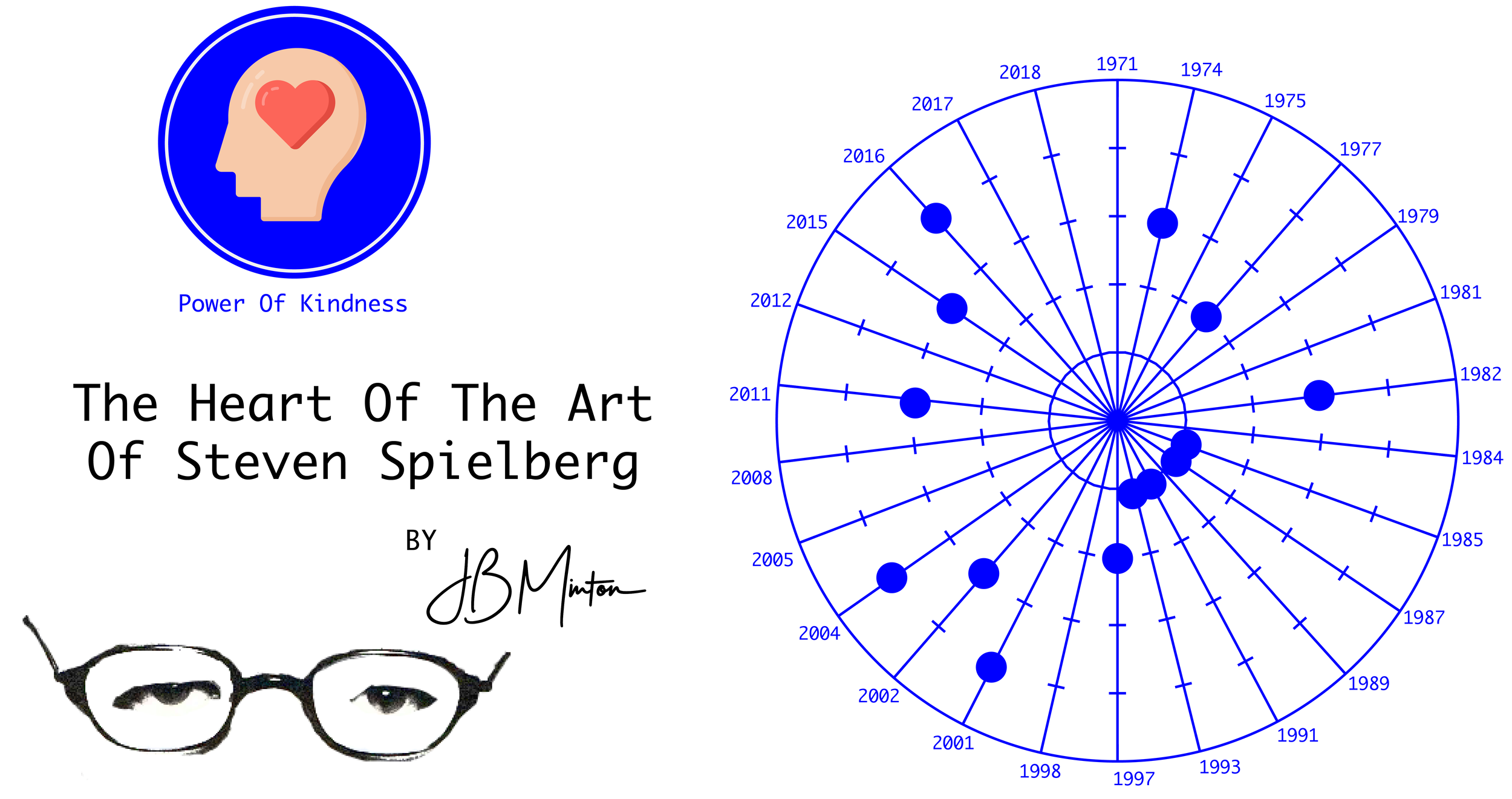
If someone asked me what I thought the single most significant theme was in Spielberg’s work, Kindness would be my answer. Kindness, the simple act of seeing and hearing another person, stepping inside their pain or at least their point of view, and responding not with cruelty, but with its opposite. Cruelty and Kindness are opposing ends of a contrasting thread that runs between the narratives of all of Steven Spielberg’s films, like a modern-day non-denominational Sunday School we’ve all been attending for fifty years. But note how the volume on Kindness was turned down during Reagan’s and George W’s burning years; I find this so fascinating to look at and think about. Above all, I’m grateful that for the last decade, Steven Spielberg turned the amplification of Kindness back up in his films, because we need the example now more than ever.
Divine Redemption
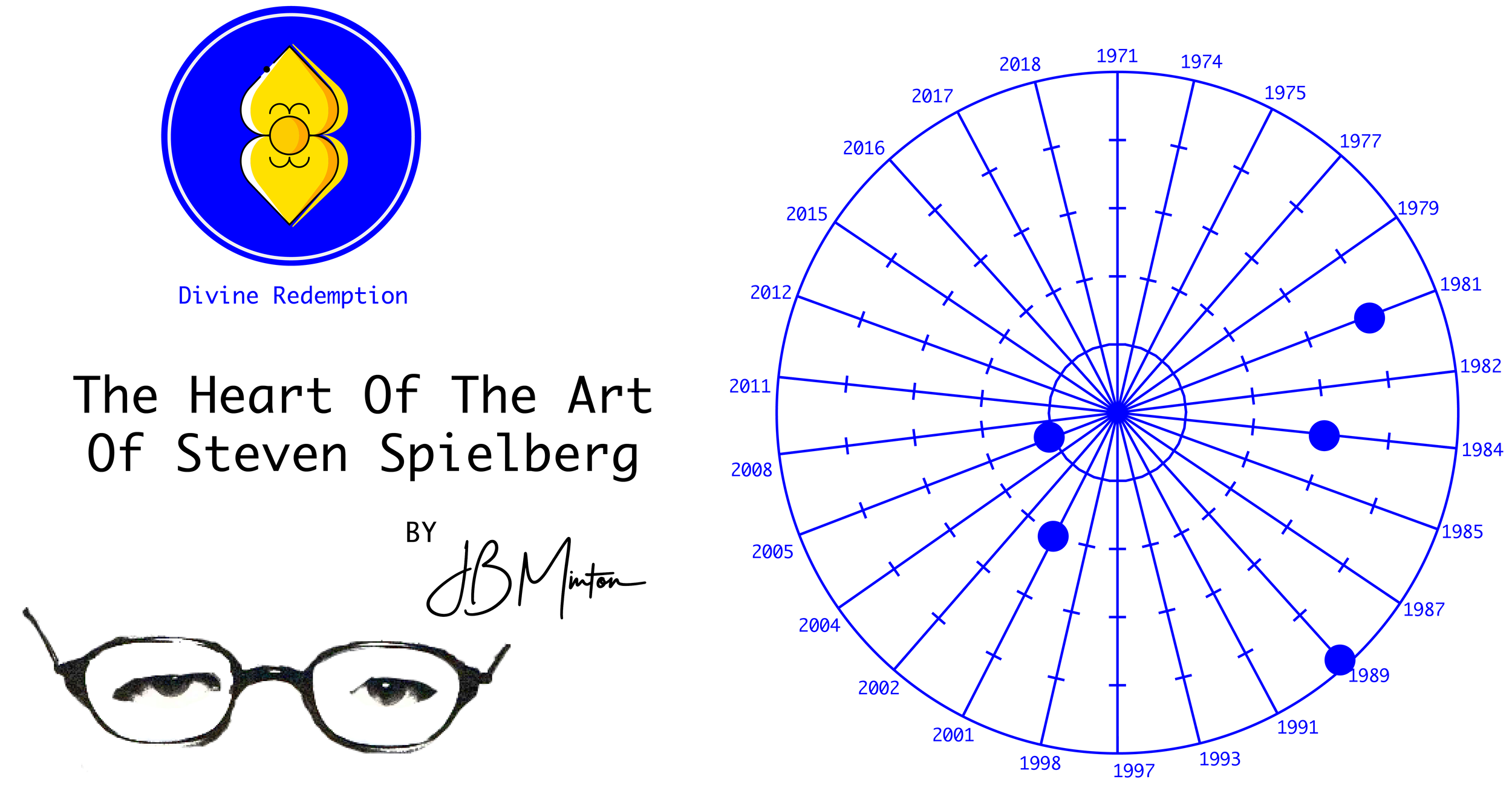
The Indiana Jones films are as close as Steven Spielberg gets to putting deities on screen. A.I. is a significant exception to this. Ronald Reagan’s America drew faith out of Steven Spielberg’s work, but after Indiana Jones and the Last Crusade, Divine Redemption was abandoned as a primary theme, only to surface as a supporting theme briefly in A.I. and even less so in Munich, where God intervened to help protect the deliverers of justice, which comes with its own cost. Ultimately, I find this theme is treated throughout the majority of Spielberg’s career with the approach of an atheist who holds little hope in what they can’t see, hear, or feel on the screen.
Death and Sacrifice
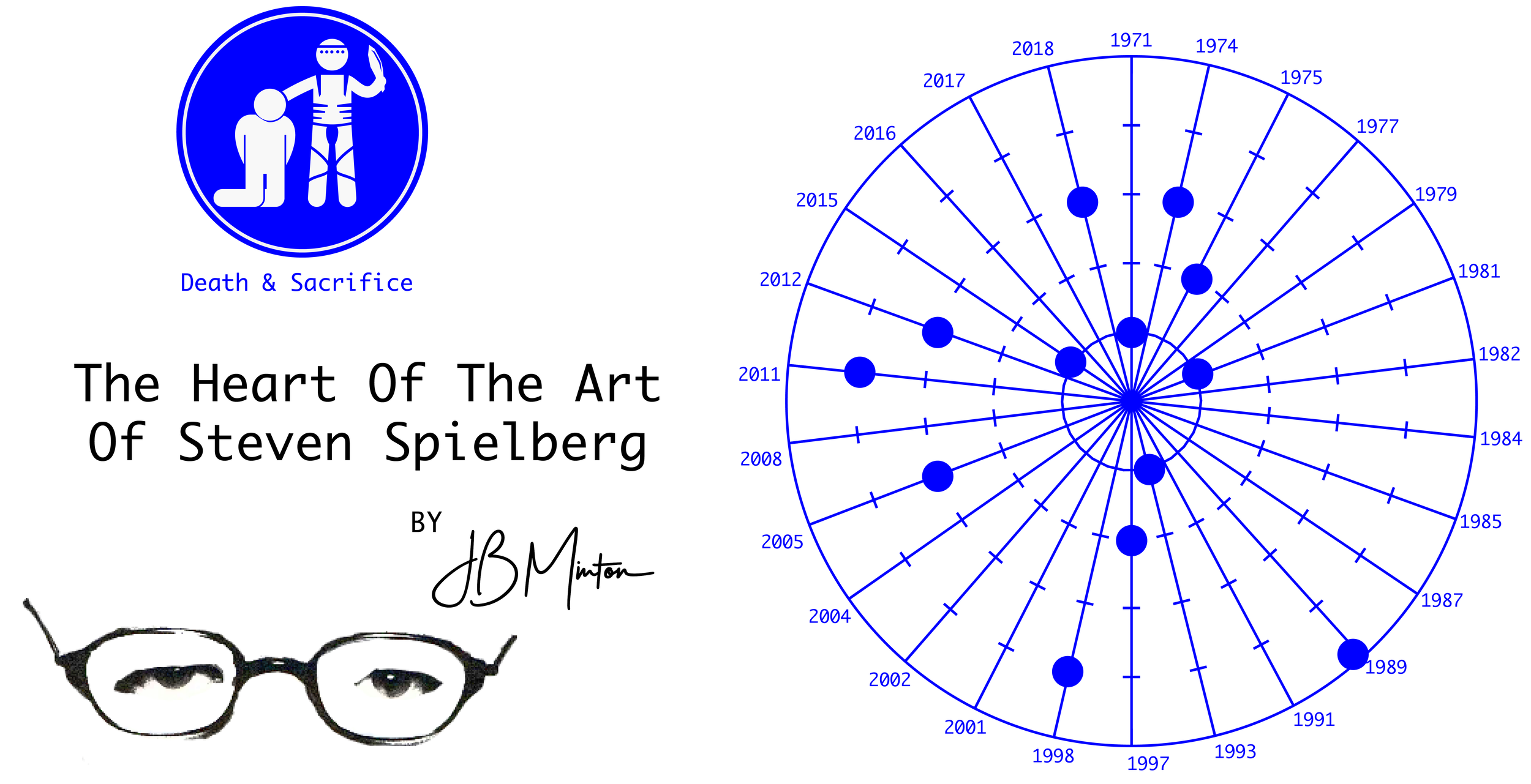
Death and Sacrifice are solid Secondary and supporting themes across all of Spielberg’s films. But in 1989, Indiana Jones And The Last Crusade joined with Always to grapple with this theme just as we were starting to learn what it meant to be without an enemy in the Cold War. Those films are meditations on death and sacrifice, a theme that recedes amid the explosion of early 90’s CGI, only to resurface with Primary force in Saving Private Ryan and later in War Horse.
Danger Of Inhumanity
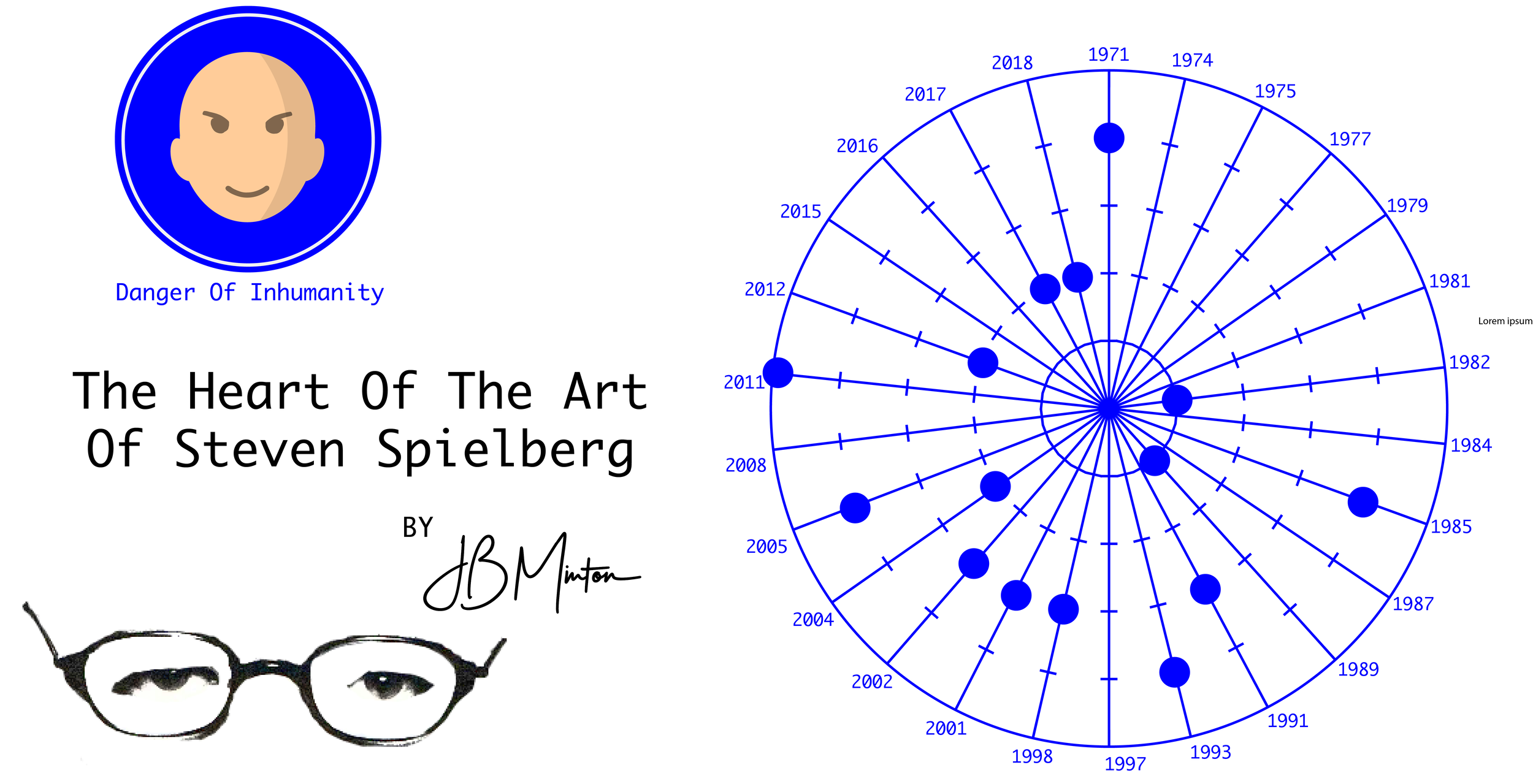
The Danger of Inhumanity is a primary theme in Spielberg’s work, starting in the 1990s. Lost World (1997) dropped it entirely, and I attribute that to the sheer force of the Danger of Nature forcing nearly every human being in that film to work together to survive. As we can see here, the Danger Of Inhumanity was emphasized heavily during the War on Terror that rose immediately following 9/11. Filming Schindler’s List and Saving Private Ryan did something to Steven Spielberg’s Artist’s heart. If I ever receive the opportunity to discuss his Art with him, I’d like this to be a primary topic of that conversation.
Danger of Technology
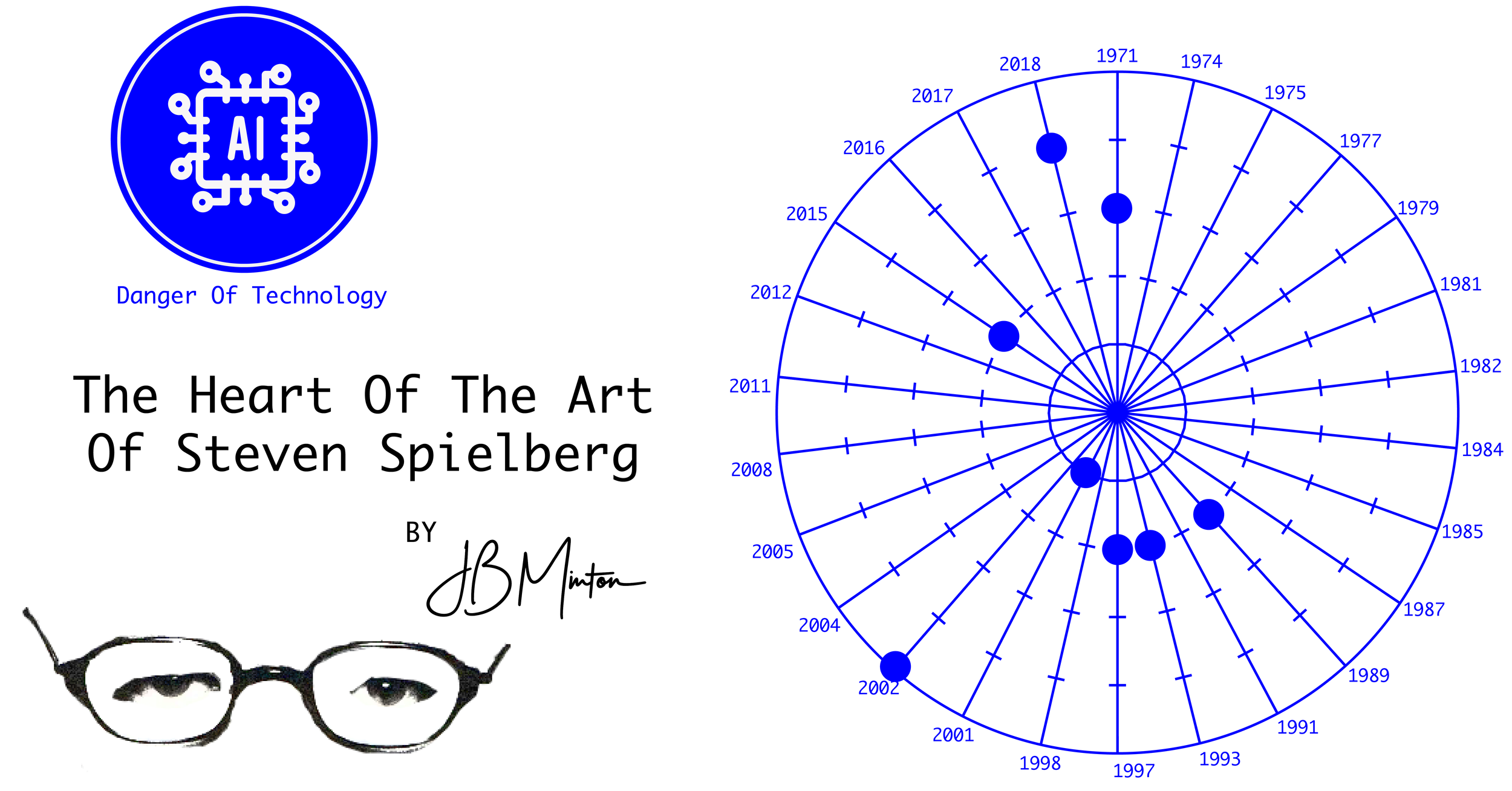
The Danger of Technology has been a consistent Nuance and supporting theme of Spielberg’s from the very beginning with Duel. However, something happened with the focus of his subject matter right around the turn of the Century. It must have been something in the world’s zeitgeist that the project of filming A.I. and then Minority Report would bookend 9/11 and the War on Terror because the focus on the danger of Technology all but disappears for the next decade of his films. When the theme resurfaces in Bridge of Spies, it is at the supporting levels seen in the 1970s, 80s & 90s. Of all my thematic impact assessments, I anticipate this one will be the most controversial, and I welcome having my opinion changed by better scholarship and a superior argument.
Danger of the “Others”
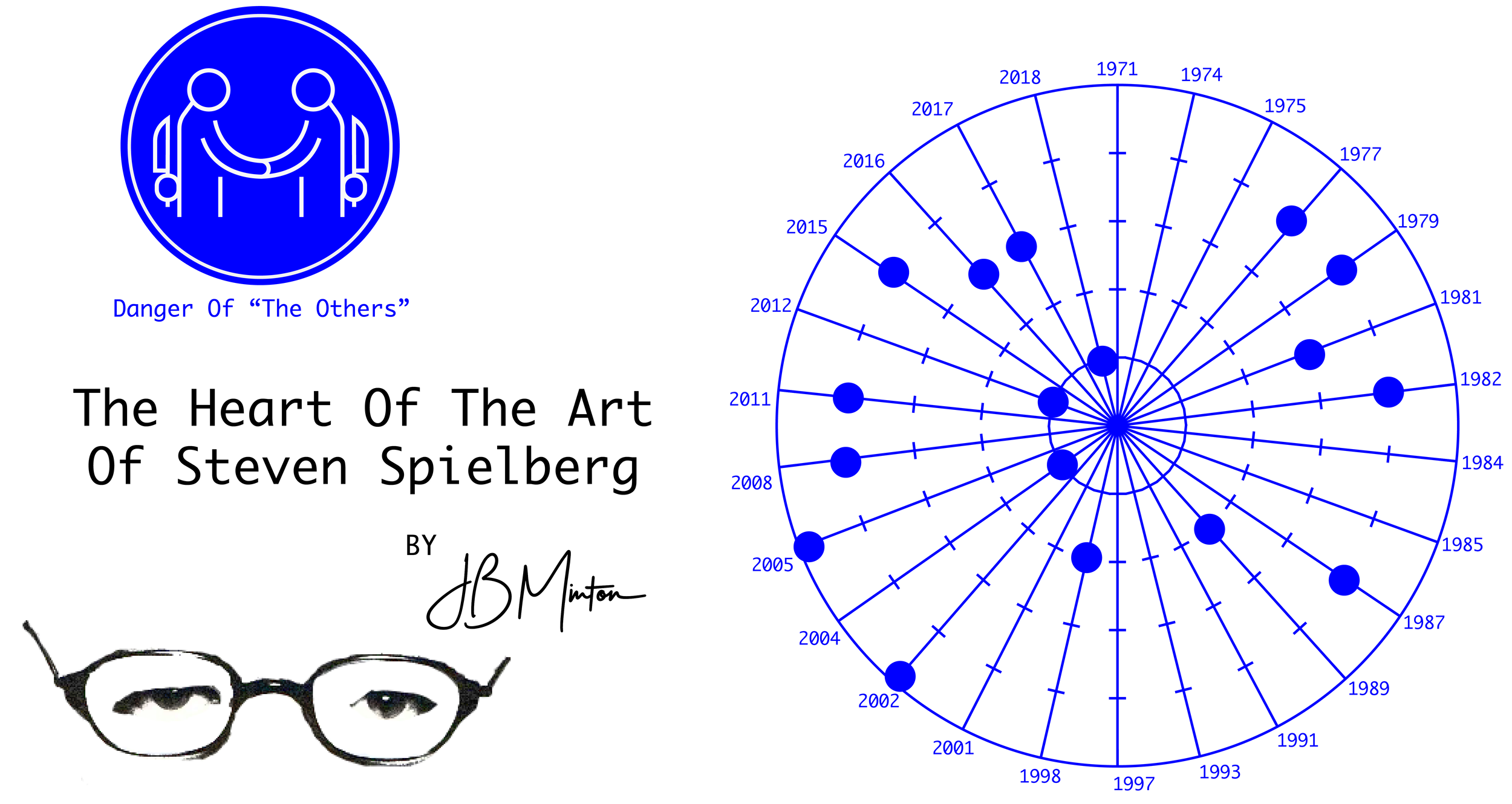
The Danger of Others is the opposite side of Kindness’s coin when considering the most common themes across Spielberg’s catalog. Of course, fear of outsiders is a common theme in most dramatic narratives across composition channels, but the threat is omnipresent for Spielberg throughout his work. This theme rises to a crescendo in the first half of the first decade of this dreadful new Century, reaching an apex with a presentation Cormac McCarthy would be proud of in War Of The Worlds, one of the most frightening Science Fiction horror films that I’ve ever seen.
Danger of Nature
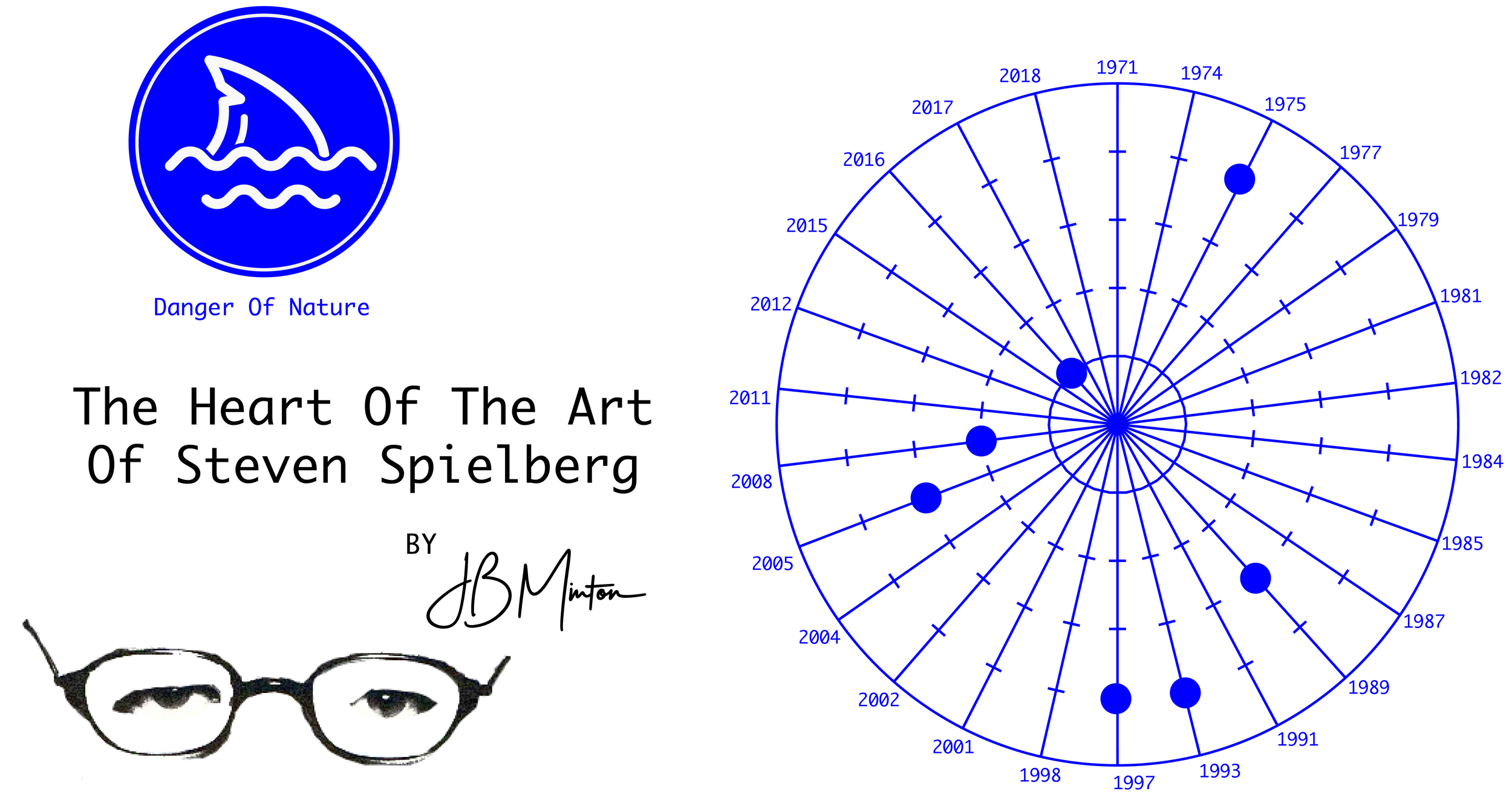
The Danger of Nature in Jaws was THE theme that created Steven Spielberg’s status as a visual storytelling legend. But the use of this theme dropped away completely when Spielberg made the transition from Lost World to Saving Private Ryan, popping back up as a Secondary theme in War Of The Worlds. I marvel at the restraint he had for not going back to the well every time on Nature As Terror after Jaws, despite the obvious opportunity to repeat success a few times. It underlies what I believe to be a truth, that human beings driven through inhumanity with cruelty to one another are the primary danger we each and all face in this world.
Danger of Cruelty
Cruelty has become a common intention for how people engage with one another online and, increasingly, in public as passing strangers these days. How many times have you read or heard someone convey, “The cruelty is the point” over the last five years? There is no more effective way to rob a human being of their capacity to show mercy than to subject them to constant cruelty, even when it’s aimed at someone else. The finger of the hand of cruelty then points into the shadows to tell us where the source of our torment lies. Pick a face. Pick a color. Let your hatred flow that way until it drains you grey. That is the danger we face when cruelty becomes the common tongue.
Before making Schindler’s List, Steven Spielberg was able to balance cruelty as an existential threat. Looking at this radar graph, we can see him take artistic breaths between Empire Of The Sun and Indiana Jones and the Last Crusade, then expend practically all of the theme’s volume in the arguably over-cruel Lost World. And what resurfaces in Munich in 2005 is caustic, made from battery acid. When the Danger of Cruelty resurfaces in BFG, it feels like it is back in balance as a foundational force in driving the narratives of the following films. I think creating Schindler’s List did a number on his Artist’s heart, though; I feel it every time I watch and become changed all over again by that film; it will always wound deeply and heal slowly.
Danger of Moral Corruption of Institutions
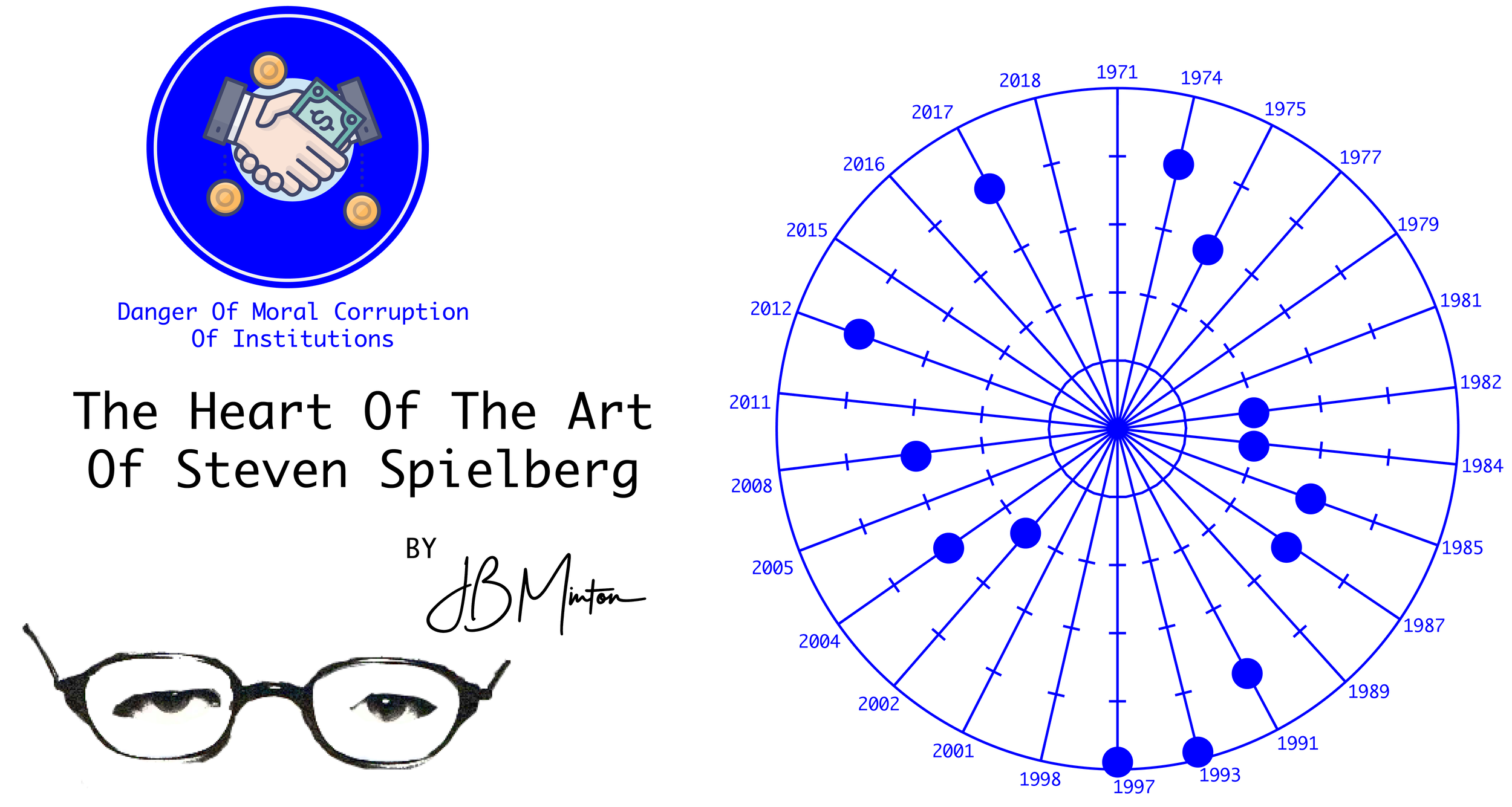
The Danger of Moral Corruption of Institutions is a fascinating theme to explore in Spielberg’s work. In the 1970s, just as Richard Nixon reached the pinnacle of his hubris, Spielberg essentially sweeps this theme to the back of the cutting room and the quietest parts of his scripts, all through Reagan’s 1980s (which would have been a great time to explore these themes more in-depth). But look how it grows again during Clinton’s America, to become loud whispers in the Bush-Obama era. Spielberg turned the thematic amplitude of this one back up in two critical films during the last decade (Lincoln and The Post), almost sensing the authoritarian wave that would sweep into America during the 2016 election season, and which has only grown in its intensity and danger since then. In this regard, Lincoln may perhaps be the most prophetic film that Steven Spielberg has ever made. And as I consider what I enjoy most about his films, this theme draws me back to view them more often over time.
Conclusion Of Part One

©JB Minton 2017. Nearing the summit of Mt. Evans in Colorado near Clear Creek, Colorado
Directing 32 films over 50 years, Steven Spielberg has created enough content that we can now appreciate and discuss the entire canon of his work. We can now effectively analyze and appreciate the application and amplification of common themes from the beginning of his career to the latest films as he enters his sixth decade of directing commercial art.
If we think of Steven Spielberg’s films as rooms in a large mansion, the Supporting Themes would be the foundation of the great house, and the Secondary Themes are the structure that gives this home its shape and functional form. But the Primary Themes, along with their Nuance counterparts, provide depth to the characters who walk these halls and tell their tales in dark rooms.
Some of these rooms are lit by unique color patterns and feature very different decorative styles. They have distinct smells and ambiance that we could even call flavors. As a child, a few years after he died, I visited Elvis’s Graceland. I remember being struck by the sheer audacity of the difference between Elvis’s Kitchen and the Jungle Room, and, looking back on that experience, how little transition there was between those rooms in the same house. I invoke this memory in service of the metaphor of Spielberg’s Mansion of Film, which I have found useful during this project. In this Mansion, one feels very different as they walk from room to room, stepping from film into film, speedwalking backward through time. Still, a consistent structure and overall emotion stay with us as we journey through this beautiful home built for our amusement and pedagogy as human beings caught without answers in this strange web of life.
KINDNESS is more potent than CRUELTY, and the morally righteous human being understands the dangers of INHUMANITY that occur when we deal with people we don’t know as if they were completely “OTHER” than we, which means human beings are best left to living in balance with NATURE on this earth, doing the best we can with the social systems we’ve created, the ones constantly under threat of erosion by CORRUPTION, and the tools of TECHNOLOGY we have developed as means of survival, education, and entertainment. But ultimately, these systems and technology tools will never be enough to overcome the heavy load of knowledge that this will all end someday for each one of us. One day, you and I will close our eyes and never open them again. This is a fact that, for some, meditating and coming to terms with DEATH AND SACRIFICE is enough to keep on living. For others, they will forever seek a DIVINE REDEMPTION to save them from the empty aloneness of this final conclusion.
The most important question then becomes, will those who seek divine redemption allow their Humanity to degrade into cruelty when what they find is nothing close to what they wished to discover?
In Part 2 of The Heart Of The Art Of Steven Spielberg, we’ll explore each film’s financial budgets and performances over each decade.