Do Fan Communities Distract Us from Art’s Real Value?
Life is a festival of disruption. — Maharishi Mahesh Yogi
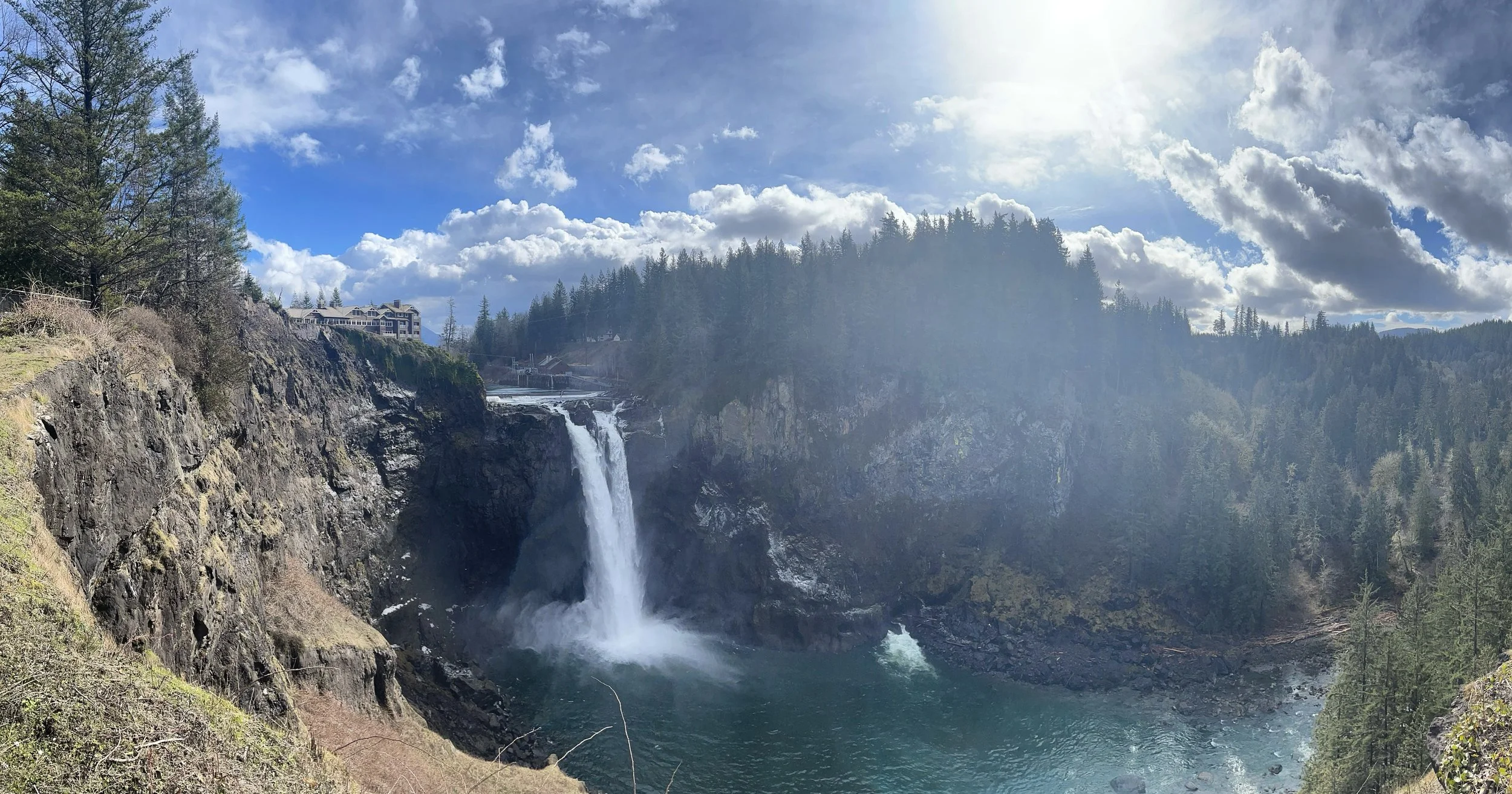
Image ©JB Minton taken in Snoqualmie Washington, February, 2023.
I don't care how you spend your time. This isn't a moral essay about your behavior. My goal is to help you understand the value and danger of what you let into your mind through your eyes and ears every day when you hit play on whatever device tells you stories about the world.
As a child, I spent a lot of time watching movies by myself. Since I built a theater in my home, I’ve spent even more time watching movies and TV shows alone in a darkened room, sometimes scribbling notes on my reMarkable tablet or slumming it with my phone, which is the ultimate distraction. I try to scrutinize what I watch, not because I’m a cynical asshole who finds fault in artists because they’ve come up short in their lives or their work, but rather because art is one of the few time-tested methods for human beings to transcend their petty individual suffering and experience life unbounded and filled with joy tempered by the sweetness of sorrow and regret. Nothing delivers this experience like cinema. And yes, TV can be cinema.
Cinema can be a worthy source of transcendence, but it can also lock a viewer into a navel-gazing waste of time that opens them up to manipulation. I’ve seen it happen. Sixteen years ago, this other dude and I started a podcast about television. We talked a lot about the TV show Twin Peaks. He loved it way more than I did. But then, Twin Peaks came back, and the roles reversed. I not only loved Twin Peaks: The Return (2017), but I also became passionate about talking about it, writing about it, and publishing my work. Today, I’ve written over a million words about that magnificent eighteen hours of cinema crammed into a single season, a work of art broadcast over streaming during the first year of Donald Trump’s first presidency.
But my podcast partner didn’t share my experience with that season. He was having a very different experience with the art, one forced through the constrictive framework of a “Fan Community.” And he graciously invited me in for a few years to experience what it’s like to attend an annual traveling religious festival focused on a TV show and movie. But first, let’s talk about another event called the Festival of Disruption.
The idea of the event was dreamed up in the artist David Lynch’s kitchen. The goal of the event was primarily twofold:
1. Raise Money
2. Raise Awareness for the David Lynch Foundation
But there was a tertiary priority as well, which was to immerse David Lynch’s fans in a setting where they could understand the artistic value of adopting the Transcendental Meditation technique into their lives, the same technique which Lynch consistently credited for his artistic inspiration and as the source of his never-ending discipline for practicing what he called “The Art Life.”
David Lynch and Bob Roth founded the David Lynch Foundation in 2005, and Roth remains the Foundation’s Chief Executive Officer. The Foundation began with a mission to teach the TM technique in schools, but has since expanded to military veterans suffering from PTSD, domestic-violence survivors, the homeless, and the legions of the incarcerated forgotten, filling prison cells with wasted potential. When the first Festival of Disruption took place, the DLF had already brought TM to half a million people. Since then, that number has risen to many, many more.
Four Festivals of Disruption took place over three years in two major cities (Los Angeles, CA, and Brooklyn, NY). Many musicians, actors, and other artists participated, delivering unique experiences in sight, sound, and transcendence. By most accounts, the program successfully established Transcendental Meditation as the premier practice of self-care and personal evolution for artists serious about their lives and work.
Sounds like lovely events. I’m sorry I missed them, but I’m also happy to avoid any gathering about art that is more about its creators than the art. Events like this feel a little too close to religious revivals and political rallies, especially when they are based on the success of films. Let me explain.
Movies are already inherently the most manipulative artistic medium invented by human beings. No other artistic expression boxes a viewer’s senses in like watching a movie in a theater. When we watch a movie, touch is marginalized as a muted factor in the experience, meaning no one engages with a film by touching the art while the story plays. So, obviously we’ve got sight and sound. Smell is out, except for gimmicks. As for taste, well, there’s no accounting for that. Taste is a variable in cinema that is intellectual, not gustatory, and we should not judge others on their taste in movies. I still laugh at horrible jokes from the comedies of my youth like Bachelor Party, Porky’s II, Long Gone, and Sixteen Candles.
So sight, sound, and...thought? We don’t often talk about thinking as a sensory input, but isn’t it? Have you ever become aware of the speed of your thoughts as they progress into one another when your mind is agitated or being driven in a flow state of concentration? Thinking is a mechanical function of the human mind. Thoughts are an assembly line of mental images assembled into patterns which bleed into other patterns, meaning other thoughts. This is how the human mind naturally works. Movies are also patterns of image and sound, packed together in consecutive order and displayed at a frame rate that consistently tricks the human eye into perceiving motion. Movies are a lie, but they’re a great lie when they work for us and a terrible one when they work against us. The moving image set to sound is always a possible trap to fall into what Eastern mystics have called the Mistake of the Intellect. Consider that a thought is a movement in three parts: A) The Observer B) The Object of Perception C) The Mechanical Process of Observation (those thought patterns). When all three of these facets of perception are balanced in the living moment, the observer maintains a distance from the object of observation that is aligned with how nature works as it will when left undisturbed by distraction.
The Mistake of the Intellect happens when the observer becomes consumed by the object of observation and the barrier between those three facets of thinking collapses. When the observer collapses into the object of perception, it is bound within that framework, limited to four dimensions. This distraction of the thinking process produces patterns of experience that, over time, coalesce into the small self. That’s what we are as individuals: temporarily stable selves, but it’s a powerful illusion, meaning the threat of damaging our ability to live fulfilling lives is almost guaranteed when we live the Mistake of the Intellect for our entire existence. Enlightenment means ceasing to make this mistake and instead becoming a balanced witnessing presence in the world.
But this mistake is not limited to thinking alone. It happens with art, as well, especially in this dying age of celebrity. For more than 70 years now, the filter of artistic celebrity has been applied to the framework of critical analysis and appreciation. In movies, it’s called auteur theory, and it holds that a film is best understood as the expression of its director’s personal vision. Film images often pull viewers into the director’s mind, inviting them to fall into the Mistake of the Intellect and its inherent danger of losing perspective. The inability to experience the units of cinema unshackled from the creator’s intention and oversight has hobbled three generations of critics, many of whom have fallen into the desperate refuge of an endless stream of oral histories that add little but trivia and noise to the intellectual landscape of art appreciation.
Being pulled into someone else’s mind without an exit door is often not a good idea. It opens humans up to all kinds of manipulation. And being manipulated by images and sounds is one of our species' key weaknesses, especially in a culture built on the Mistake of the Intellect when processing patterns of mental images.
This Festival of Disruption was successful because people came together to celebrate art with the celebrity artist who creates it and those who bring it to commercial markets of entertainment consumption. It also shared the value of the Transcendental Meditation technique as a technology of human consciousness, allowing the physiology to settle deeply, “deeper than the deepest sleep,” as the TM instructors say.
Over time, meditation session by session, the little knots of accumulated stress are released from the mind and body. And that poor little ego, slaving to gather up all these broken patterns of experience from the Mistake of the Intellect, gradually loses its hold, no longer able to organize and maintain those patterns as a limited (and often pitiful) container for a small self. This knowledge was the real value of what was conveyed to thousands of influential artists and business people through the Festivals of Disruption. But those festivals were not my experience with gathering in a small community around this art.
The Twin Peaks Festival began in 1992, when New Line Cinema worked with the Snoqualmie Falls Chamber of Commerce to stage the “First Annual Twin Peaks Fest.” The first festival opened on a blistering late-summer day. The festival's final day featured the United States premiere screening of Lynch’s latest film, Twin Peaks: Fire Walk with Me. During that weekend, the actors greeted fans and signed merchandise and collectibles. The festival also included a pie-eating contest and a hike up nearby Mount Si. People ran around with heavy logs in the Log Lady Relay Race. There were dinners at the Salish Lodge, which appears in the introduction and establishing shots of Twin Peaks. It sounds like a cool marketing event that hit fans at the exact time Twin Peaks was likely going away forever.
No one knew what would happen after Twin Peaks: Fire Walk with Me was supposedly booed at the Cannes Film Festival and panned by most celebrity-culture critics who seemed forever locked into interpreting movies through their creators’ intentions. There were exceptions to being forced to write about a movie through the lens of who directed it, but those critics were largely ignored and confined to academic texts few read or could read.
So Twin Peaks was ignored commercially, but it was far from dead. The fanatics who gathered to celebrate this commercially abandoned art were just getting started. Scholars like John Thorne and Craig Miller started Wrapped in Plastic magazine, where interviews with the actors, writers, and creators sat alongside thoughtful analyses of different aspects of the art. Fans made fan films, wrote fan fiction, and created some of the most touching human art to come from cinema. Twin Peaks was something special in the hearts of those who kept it long after they pushed stop on their VCRs and later their DVD players. The art arrived at a time when fans could buy episodes and watch them over and over again. Commercial technology had reached a point where we could curate invaluable collections of the stories that moved us and spoke to those mystical patterns of the small self we often sense but struggle to define.
So fans got to worship this art with devotion like a private religion. And no religion is complete without rituals. While the 1992 Twin Peaks Festival may have been a one-time marketing gimmick for the studio, the fans wanted more, and they wanted it in the place where the art was born. The first fan-run Twin Peaks Festival started the very next year, in 1993. About 200 people came each year over the next few years. In 1998, a new organizer took over the Twin Peaks Festival and offered a single package ticket for a festival based at Kiana Lodge, where the interior shots of the Great Northern Hotel were filmed for the Twin Peaks pilot. The organizer role changed hands right around the time two planes crashed into the World Trade Center and brought those buildings down. Attendance dipped to around 100 in the mid-2000s, even as lead actors began appearing, then climbed back to about 200 by 2012. After Twin Peaks: The Return aired and its cast was freer to talk about it, the guest lists ballooned to more than 20 stars. The 2019 festival was the last; that December, the organizers announced there would be no 2020 edition.
For nearly 30 years, this festival drew hundreds of people into a community ritual experience centered on a saga of narrative art that continues to move people and gain new devotees every day. I never attended an official Twin Peaks Festival. I have no firsthand experience answering trivia questions, taking a bus tour around the area, or spending a few minutes talking to a celebrity actor. Instead, my first fan festival experience took place in England, when I attended the Twin Peaks UK Fest in 2019, a lovely little gathering of human beings concerned with the art of Twin Peaks. I loved nearly every person I met there. Wonderful people having a good time together, celebrating the art each of us loved in our own ways, in the private spaces of the thought patterns we fill with cinema.
And I attended a couple of private festivals, much more intimate in function than the packaged ticket deals. These events brought together a small group of “loyal” fans who, for many reasons, grew disillusioned and frustrated with the last organizers of the official Twin Peaks Festival. There was all kinds of shit talking happening about the canceled Twin Peaks Festival, but none of it had anything to do with me, my wife, or the art, so I tried my best to stay out of it and provide support in whatever way I could, even if I had to fake it. After all, I was a guest of a guest and needed to mind my manners. The Twin Peaks fans I met from around the world were mostly wonderful people, but after going to a few of their meetings, I decided I enjoyed spending time in Snoqualmie and North Bend much more when it was just my wife and me leisurely enjoying these spaces and their opportunities for aesthetic arrest, like stepping inside a moving painting.
Nowadays, local civic groups organize and operate the annual Real Twin Peaks event, which has become both a celebration of art with local connection and a way to boost revenue through tourist dollars. And the fans got their festival back. Win. Win. Win.
Because I had written a book and founded a podcast that participated in the critical response to Twin Peaks: The Return, I went to one of the early Real Twin Peaks weekends a few years ago, and even spoke on stage with two other Twin Peaks scholars while a small coffee shop audience asked questions and offered support. Like I said, wonderful people. I’ve even met a few actors and yes, got their dumb signatures. I’ve paid my money into the Twin Peaks economy.
But what does any of that have to do with the art?
If life is a festival of disruption, what do we do with that which distracts from that disruption?
Is that a festival of distraction?
Watching a movie through the lens of the creator’s intentions and choices distracts.
Gathering together to worship a movie, a book, a song, a painting, or an idea is a distraction.
Gathering together to worship another person reinforces the prison of the small self.
But a larger Self (capital “S”) is available to everyone. David Lynch knew about it. He created a foundation to make it available to the people who need it most: everyone. He created art inspired by the concepts of enlightenment he learned intellectually before he learned them experientially and then baked them so deeply into art that almost no one can pull them out, but everyone who sees his movies feels it when the lights come up in the theaters of our minds.
So, do fan communities distract us from art's real value? Well, the next time you’re watching a movie, ask yourself, “Who is the observer watching this movie right now?” And when that answer is revealed, ask yourself: “Do I need more than this experience with this art?” If the answer is yes, you may enjoy becoming part of a fan community.
Cinematic drama can change our lives and how we think and behave toward one another. After all, movies are memes, and memes are, well, memetic. They’re built to be copied. Likewise, religious rituals are built to be repeated, bringing people together in accord with their environment, nature, and each other. In this sense, a fan community is a wonderful thing to celebrate and be celebrated within. Unless, of course, you’re naturally an outsider who would never become part of a community that accepted you. And if you throw high-school-level drama into that environment, it quickly degrades into a world-class distraction that has nothing to do with the art under observation, analysis, and appreciation. It’s the Mistake of the Intellect again, only now the object we collapse into isn’t the film or its director. It’s each other, and it’s ultimately a distraction from art's real value.
So, we must each be careful with the dramas we allow into our conscious presence. Get caught up in the wrong drama, and suddenly we’re living someone else’s life, not our own. For my part, I enjoyed much of my time with the people in the Twin Peaks fan community. I wish them all well.
I’ll be over here in my theater, scribbling on my reMarkable because there is always another movie to watch, and because I still haven’t found a satisfying answer to the question, “Who is the dreamer?”